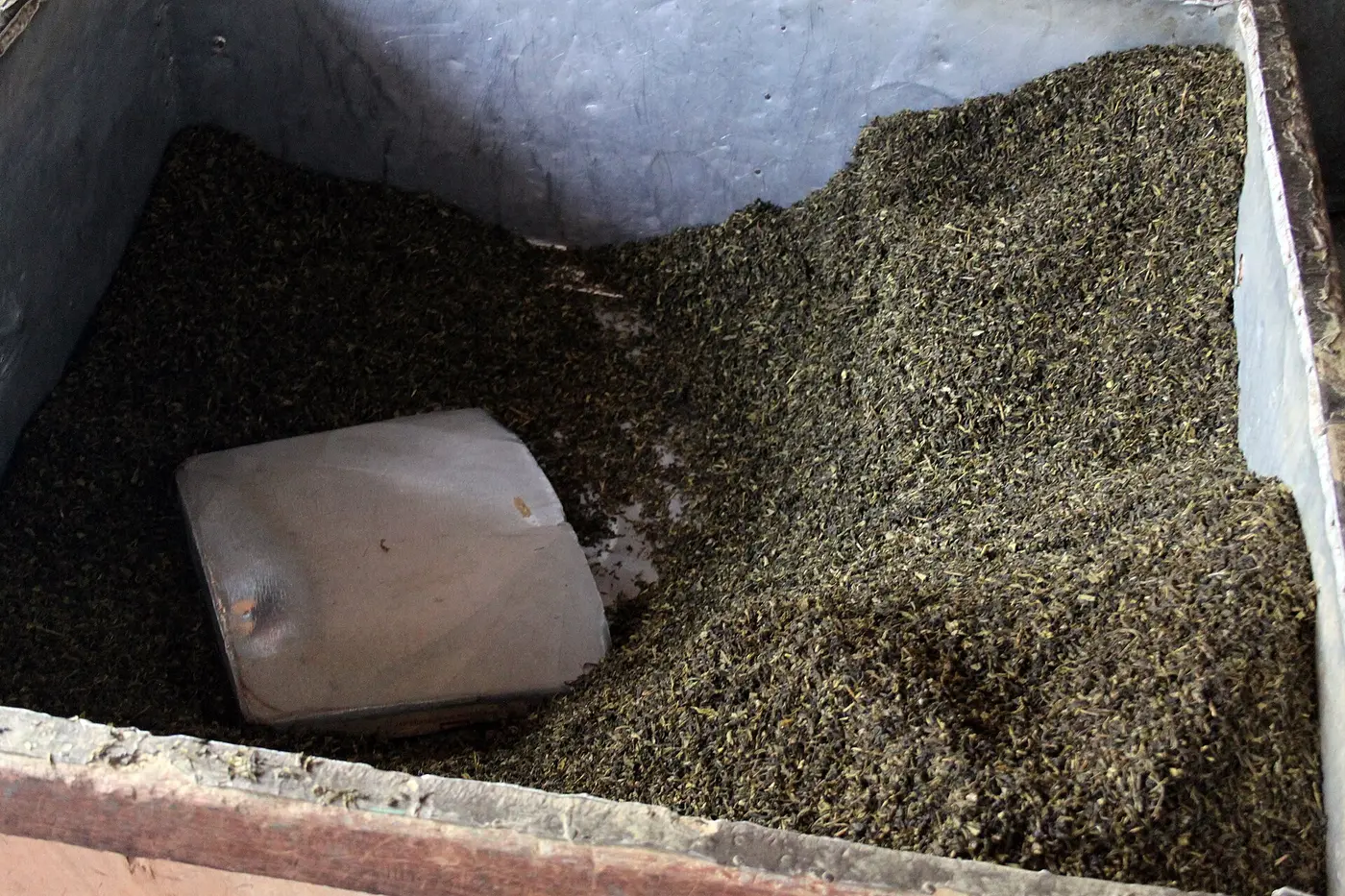

Grades describe the size and appearance of the leaf (whole or broken, how many tips). They do not measure flavour. A brilliant FTGFOP1 can beat a mediocre SFTGFOP1. The estate, flush, invoice and taste matter more.
The letters
| Letter | Stands for | Meaning |
|---|---|---|
S | Special | Top selection within the grade |
F (first) | Finest | Superior selection |
T | Tippy | Rich in tips (unopened buds) |
G | Golden | Tips show golden colour after processing |
F (second) | Flowery | Includes buds / fine plucking |
O | Orange | Traditional term, no flavour meaning (see below) |
P | Pekoe | Whole leaf of a certain size |
1 | Grade one | Best of that grade (finer, more uniform leaf) |
So SFTGFOP1 = Special Finest Tippy Golden Flowery Orange Pekoe, grade one. In plain terms: whole leaf, very fine plucking, lots of golden tips.
Whole-leaf grades (highest to lowest)
- SFTGFOP1: Special Finest Tippy Golden Flowery Orange Pekoe
- FTGFOP1: Finest Tippy Golden Flowery Orange Pekoe (the most common premium Darjeeling grade)
- TGFOP: Tippy Golden Flowery Orange Pekoe
- GFOP: Golden Flowery Orange Pekoe
- FOP: Flowery Orange Pekoe
- OP: Orange Pekoe
Broken, fannings and dust
| Category | Examples | Use |
|---|---|---|
| Broken leaf | TGFBOP, GFBOP, FBOP, BOP | Stronger, quicker brew; good value loose tea |
| Fannings | GOF, FOF, BOPF | Teabags |
| Dust | D, PD | Teabags, fast strong colour |
Why "Orange Pekoe"?
Nobody knows for certain, and the tea has nothing to do with oranges. Pekoe is usually traced to a Chinese term for white down (on young buds). "Orange" is often said to honour the Dutch House of Orange-Nassau, whose traders dominated early European tea commerce. Others link it to the coppery colour of well-made leaf. Treat both as plausible folklore.
Other codes on Darjeeling labels
| Code | Meaning |
|---|---|
CH / China | Made from China-variety bushes |
CL / Clonal | Made from clonal cultivars (e.g. AV2, P312, B157, T78) |
Musc / Muscatel | Lot selected for muscatel character |
EX / DJ + number | Invoice (batch) number. Low EX numbers indicate early-season lots. |
Wonder, Moonlight, Spl, etc. | Estate-specific marketing names for special lots |
FF / SF / AF | First / second / autumnal flush |
Clonal vs China: does it matter?
Yes, for flavour. China bush teas are often more subtle, sweet and classically muscatel. Clonal teas from selected cultivars such as AV2, famous for intensely floral first flushes, tend to be more aromatic and showy. Many lots are a mix. Neither is "better", so taste both.
Questions & answers
What does SFTGFOP mean?
Special Finest Tippy Golden Flowery Orange Pekoe: a whole-leaf grade with very fine plucking and abundant golden tips. A trailing "1" denotes the best of that grade.
What does FTGFOP1 mean?
Finest Tippy Golden Flowery Orange Pekoe grade one, the most common premium whole-leaf Darjeeling grade.
Does a higher grade mean better taste?
Not necessarily. Grades describe leaf size and appearance, not flavour. Estate, flush, invoice and how the tea was made matter more.
What is clonal Darjeeling?
Tea made from clonal cultivars, plants propagated from cuttings of selected mother bushes (such as AV2). They are often more intensely aromatic than China-bush teas.