
What is "muscatel"?
Muscatel is Darjeeling's signature: a sweet, musky, grape-like perfume reminiscent of muscat grapes and muscat wines. It is most typical of second flush and is never guaranteed. Prized "muscatel lots" are celebrated and command premiums.
Its origin is partly biological. Small sap-sucking insects, especially the tea green leafhopper (jassid, variously named Empoasca / Jacobiasca) and thrips, feed on leaves in early summer. In response the plant produces defensive aroma compounds, including terpene alcohols such as linalool, geraniol and hotrienol. These carry through processing into the cup. Taiwan's famous Oriental Beauty oolong relies on a similar insect-plant interaction.
"Muscatel" doesn't mean the tea tastes of wine or contains grape. It's an aroma resemblance, the same way some wines are called "grassy".
Flavour vocabulary
Useful words by flush:
First flush
Second flush
Autumnal
How professionals describe tea
- Briskness: a lively, clean "bite" on the tongue (good). Different from bitterness.
- Body: weight and fullness in the mouth.
- Bright: a clear, glowing liquor. Dull or muddy liquor is a fault.
- Pungent: strong astringency with briskness, prized in Darjeeling.
- Tippy: lots of golden or silver bud tips in the dry leaf.
- Infused leaf / "infusion": the wet leaf after brewing. Bright, coppery-green and even means good manufacture.
More terms in the glossary.
How to cup Darjeeling at home
Professional "cupping" standardises everything so only the tea varies:
- Weigh 2.8–3 g of leaf (the ISO 3103 standard uses 2 g per 100 ml) into a lidded cup or small mug.
- Add about 150 ml of just-boiled water. Professionals use boiling water to expose flaws.
- Steep 5 minutes (some Darjeeling tasters use 4).
- Pour the liquor into a bowl and tip the wet leaf onto the upturned lid.
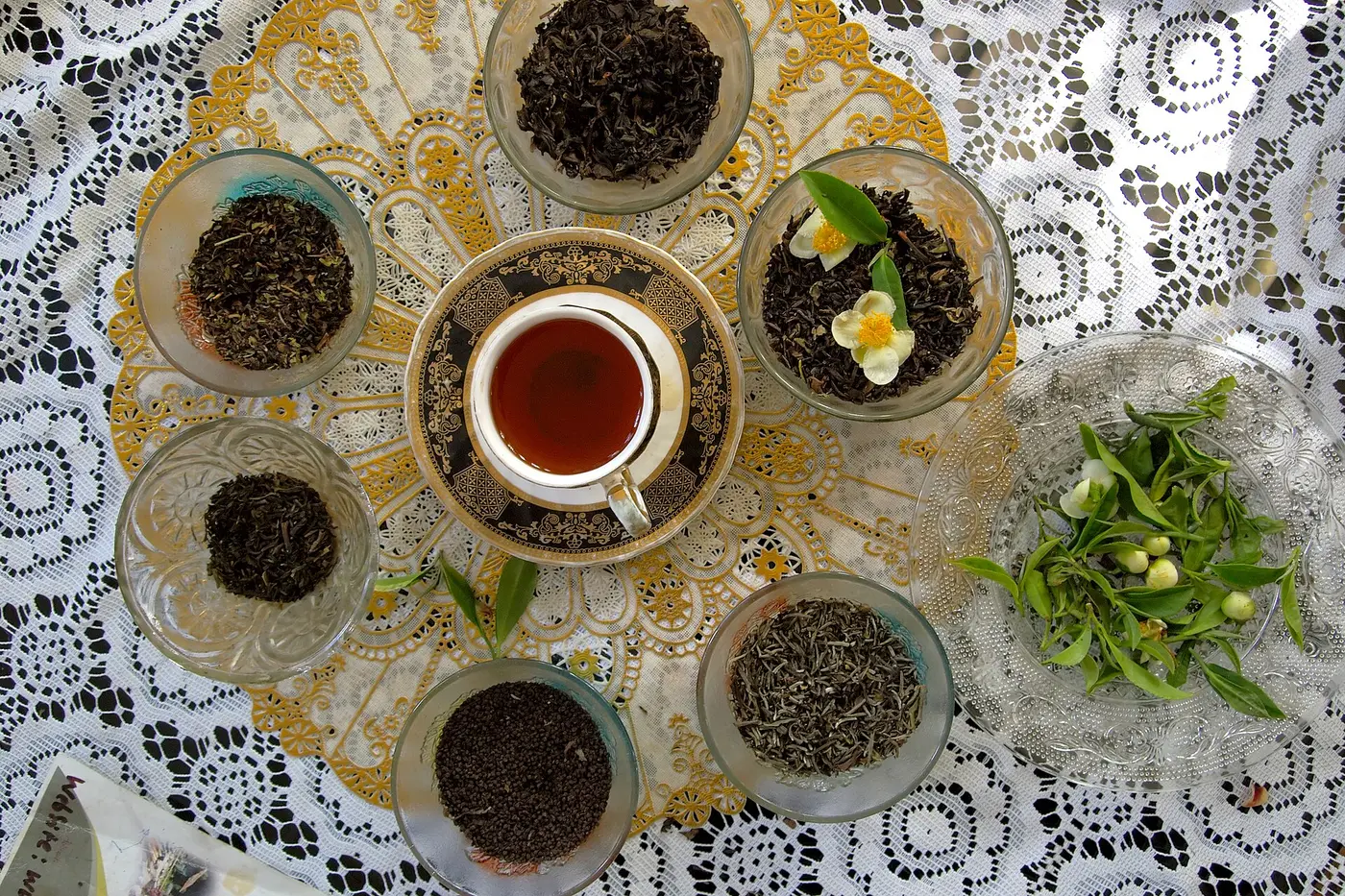
- Look: dry leaf (twist, colour, tips), liquor (brightness, colour) and infused leaf (evenness).
- Smell: the wet leaf, warm. Aroma is strongest here.
- Slurp: draw a spoonful in noisily with air to spray the palate. Note the taste, body, astringency and how long the finish lasts.
Reading the dry leaf
- First flush: a variegated mix of green, brown and silvery tips, wiry and light.
- Second flush: darker brown with golden tips, more uniform.
- Autumnal: dark brown to almost black, bolder leaf.
- Warning signs: lots of dust and stalk, a dull grey colour, or a stale or musty smell.
Food pairing
- First flush: fresh fruit, goat's cheese, cucumber sandwiches, light seafood, almond cake.
- Second flush: scones and cream, fruit tarts, milk chocolate, aged gouda, roast chicken.
- Autumnal: nutty pastries, gingerbread, caramel desserts, mild curries.
Questions & answers
What does muscatel taste like?
Muscatel is a sweet, musky, grape-like aroma reminiscent of muscat grapes, often with ripe fruit and honey nuances. It is most common in second flush Darjeeling.
What causes the muscatel flavour?
It is linked to tea leafhoppers (jassids) and thrips feeding on leaves in early summer. The plant responds by producing aromatic terpene compounds such as linalool, geraniol and hotrienol.
How do professionals taste tea?
They cup it: a standard weight of leaf is steeped in boiling water for about 5 minutes, then they assess dry leaf, liquor and infused leaf, and slurp the tea to spread it over the palate.