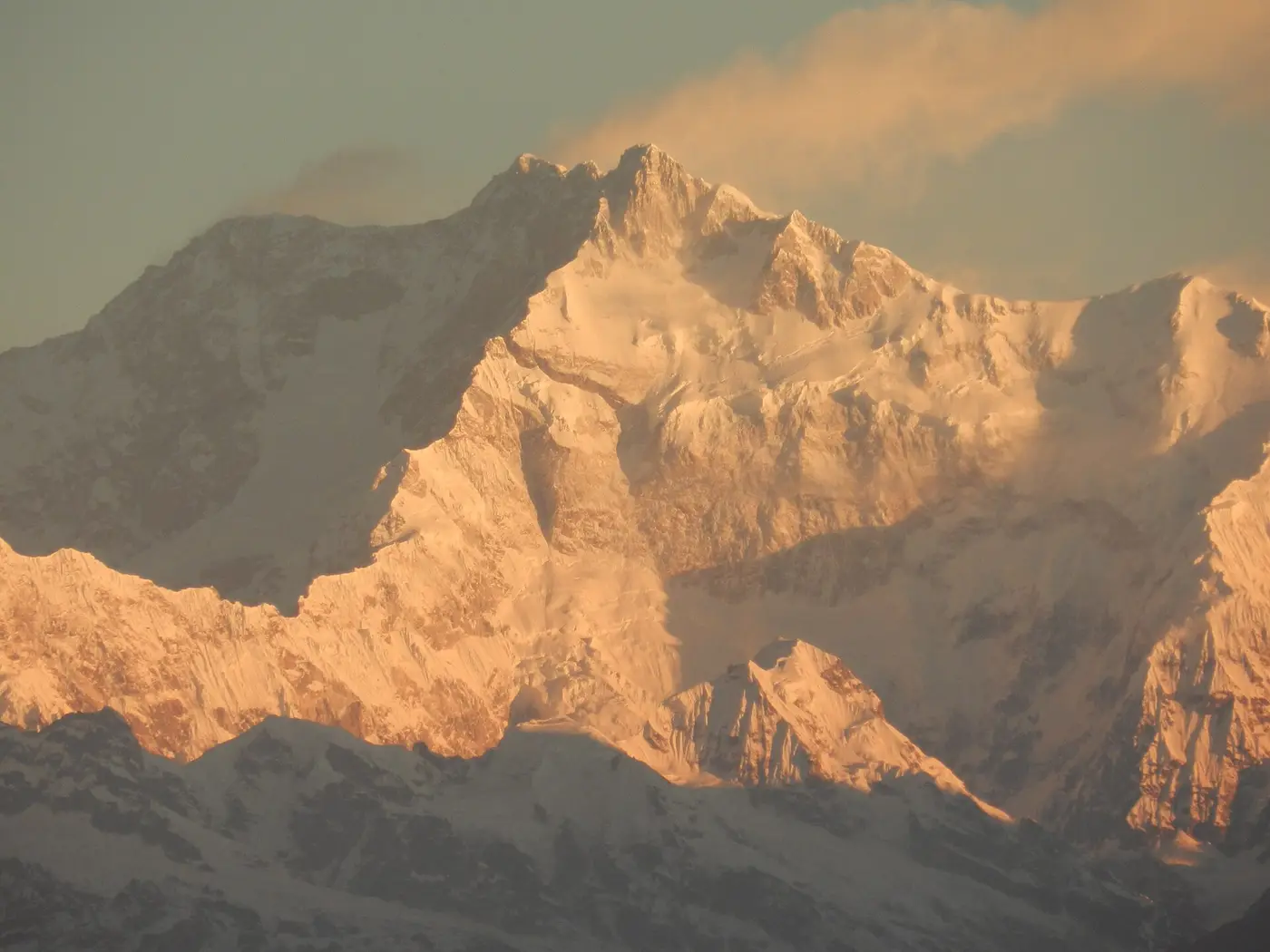

Geography
The gardens spread across steep ridges and valleys of the eastern Himalayan foothills. Rivers including the Teesta, Rungeet (Rangit), Balason and Mechi cut through the hills. The GI area covers parts of the Darjeeling Sadar, Kurseong and Mirik sub-divisions, plus a handful of gardens in today's Kalimpong district.
The seven traditional tea regions
The trade commonly groups the gardens into seven areas:
- Darjeeling East
- Darjeeling West
- Kurseong North
- Kurseong South
- Mirik
- Rungbee Valley (Rangli Rangliot)
- Teesta Valley
Within each area, individual slopes differ. A single estate can run from riverside valley to ridge-top, with very different teas from each section.
Altitude
Gardens sit from roughly 600 m to about 2,000 m. Higher elevations bring cooler temperatures, more mist and slower growth. Slow growth tends to concentrate aroma compounds. That is the main reason high-grown tea is prized, though skilful making matters just as much. Lower gardens warm up earlier and often produce the first invoices of spring.
Climate
- Winter (Dec–Feb): cold and dry. Bushes go dormant and are pruned.
- Spring (Mar–Apr): warming days, cool nights, early showers. First flush.
- Early summer (May–Jun): warm and humid, with insects active. Second flush.
- Monsoon (Jul–Sep): very heavy rain, often several metres a year in parts of the hills. Fast growth and landslide risk.
- Autumn (Oct–Nov): clear, crisp and dry. Autumnal flush.
Mist matters too. It filters sunlight and slows growth, a little like the shading used for Japanese gyokuro, but natural.
Soil
Tea likes acidic, well-drained soil. Darjeeling's hill soils are generally acidic, light and porous over steep slopes. Good drainage is vital in the monsoon. Erosion and landslides are a constant challenge, and well-kept terraces, shade trees and drains are signs of a well-run garden.
The plant: China, Assam and clonals
Darjeeling's early gardens were planted with China seed, and the small-leaved, cold-hardy China variety still covers a large share of the area. Some bushes have been producing for more than a century. Assam-type hybrids and, since the mid-20th century, clonal cultivars selected for yield, hardiness and aroma (AV2, P312, B157, T78 and others) have been widely planted. Many prized "China" and "Clonal" invoices reflect this mix.
Climate change and challenges
Erratic rainfall, drought in the spring flush, rising temperatures and new pest pressure have all hit yields. Production fell from about 14.5 million kg in 1990 to around 5.6 million kg in recent years. Labour shortages, ageing bushes and cheap competition add to the strain. The industry is exploring replanting, organic practices, specialty teas and tea tourism.
Questions & answers
At what altitude is Darjeeling tea grown?
Darjeeling tea gardens range from about 600 m to roughly 2,000 m above sea level.
What are the regions of Darjeeling tea?
The trade traditionally recognises seven areas: Darjeeling East, Darjeeling West, Kurseong North, Kurseong South, Mirik, Rungbee (Rangli Rangliot) Valley and Teesta Valley.
Why is Darjeeling tea production declining?
Climate stress, ageing bushes, labour shortages, political disruption (notably 2017) and competition from cheaper teas have cut output by over 60% since 1990.