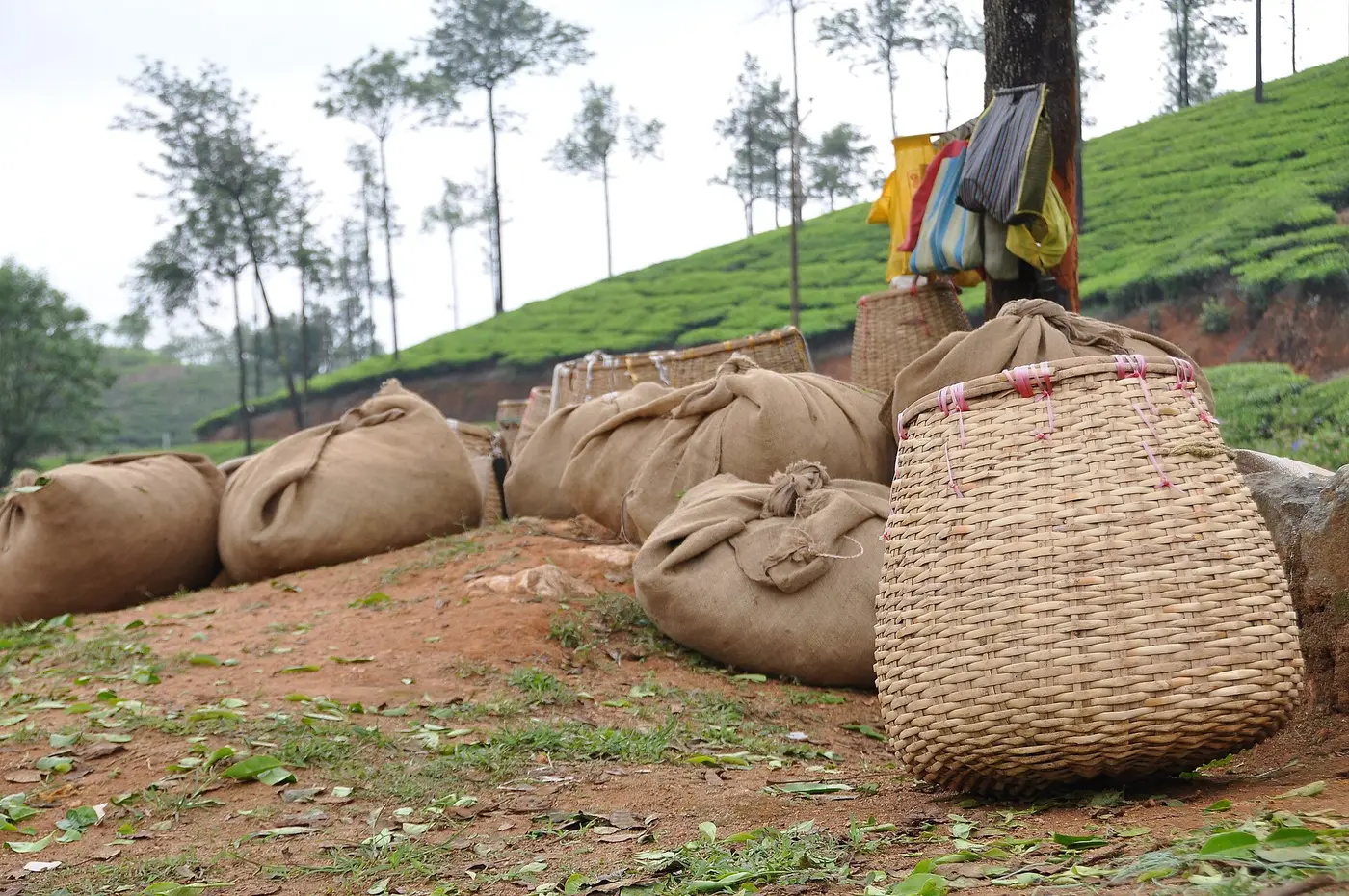

1. Plucking: "two leaves and a bud"
Darjeeling is plucked by hand, overwhelmingly by women, on slopes too steep for machines. The fine standard is the bud and the top two leaves of each shoot. Pluckers carry a basket (doko) on their back, hung from a strap across the forehead, and return to each section of bushes every week or so during the season. Leaf is weighed at collection points and hurried to the factory, because freshness matters.
2. Withering
Fresh leaf is spread in long troughs while fans push air through it for many hours, often overnight. It goes soft and limp and loses a large share of its water. Withering also starts chemical changes that build aroma. Darjeeling is known for relatively "hard" (long, heavy) withers, especially in first flush.
3. Rolling
Withered leaf is twisted in rolling tables. This breaks the cell walls, so the leaf's juices, enzymes and polyphenols mix and coat the surface. Rolling also gives orthodox leaf its wiry, twisted look. Lighter rolling keeps more whole leaf. Longer or harder rolling makes more broken grades.
4. Oxidation ("fermentation")
The rolled leaf rests in cool, humid air. Enzymes (polyphenol oxidase) react with oxygen, turning catechins into theaflavins and thearubigins, the pigments and flavour compounds of black tea. Factories still call this "fermentation", though it is not microbial. The tea maker judges by nose and colour when to stop. First flush is usually stopped early, second flush taken further.
5. Drying (firing)
Hot air dryers stop oxidation and bring moisture down to a few percent so the tea keeps. Too hot and the tea tastes baked. Too cool and it goes flat.
6. Sorting, grading and tasting
Made tea is sieved and sorted by size and appearance into grades: whole leaf, broken, fannings and dust. Each day's batch is tasted, then bulked into lots called invoices (e.g. "DJ-123"). They are sold at auction in Kolkata, privately to importers, or directly to customers. Because every day's plucking is a little different, two invoices from the same estate and month can taste noticeably different.
Darjeeling is made only by the orthodox method. The CTC (crush-tear-curl) process behind most Indian teabag tea is not used, and the GI specification is for orthodox tea.
Questions & answers
What does "two leaves and a bud" mean?
It is the plucking standard for fine tea: only the unopened bud and the two youngest leaves of each shoot are picked.
Is Darjeeling tea fermented?
Not in the microbial sense. Tea makers use "fermentation" to mean enzymatic oxidation, the chemical reaction that turns green leaf into black tea.
Is Darjeeling tea hand picked?
Yes. Darjeeling tea is plucked by hand, because the steep terrain and the fine plucking standard rule out machine harvesting.