
- 87registered tea gardens
- ~17,500 haunder tea cultivation
- 600–2,000 mgarden elevations
- ~5.6 M kgmade in 2024 (vs 14.5 M kg in 1990)
- 2004India's first GI registration
The short answer
All "real" tea, Darjeeling included, comes from the same plant, Camellia sinensis. Darjeeling is special because of where and how it is grown:
- Place. Tea can only be sold as "Darjeeling" if it comes from one of the 87 tea gardens registered with the Tea Board of India in a defined area of the Darjeeling and Kalimpong hills. The name is a Geographical Indication (GI) in India and a Protected Geographical Indication (PGI) in the European Union.
- Plant. Much of the acreage is planted with the small-leaved China variety (Camellia sinensis var. sinensis), plus selected clones bred for flavour. Most Indian tea comes instead from the large-leaved Assam variety.
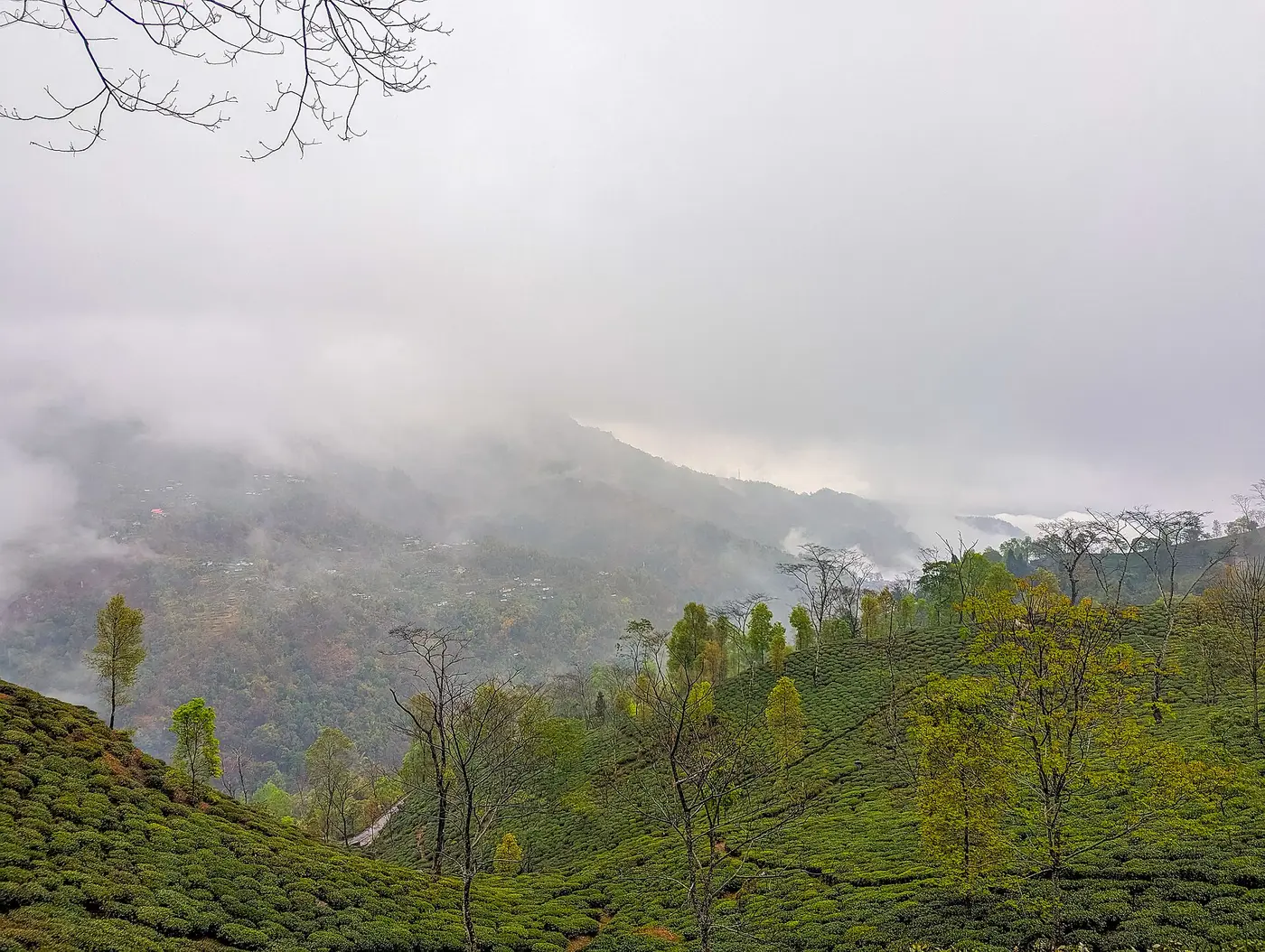
- Altitude and climate. Gardens climb steep Himalayan slopes. Cool nights, mist, and a dormant winter slow the bush's growth and concentrate aroma.
- Craft. Leaves are plucked by hand, usually as "two leaves and a bud", and made only by the orthodox method: withered, rolled, oxidised and dried as whole or broken leaf. Darjeeling makes no machine-cut CTC tea.
- Seasons. The harvest comes in distinct flushes, and each one tastes noticeably different.
What does Darjeeling tea taste like?
Darjeeling is lighter, brighter and more aromatic than the malty black teas most people know from breakfast blends. Typical descriptors:
- First flush (spring): pale golden-green cup; fresh, floral, green-apple, citrus-blossom; a pleasantly brisk, almost wine-like astringency.
- Second flush (summer): amber to coppery cup; ripe fruit, the famous "muscatel" grape note, more body and depth.
- Autumnal flush: darker, rounder and mellower, with woody, nutty and sweet notes.
If you have only ever tasted Darjeeling from a teabag, try a loose-leaf, single-estate first or second flush. It can feel like a different drink.
Is Darjeeling a black tea?
Mostly, yes. Traditionally it is sold and classified as black tea. In practice, many first-flush Darjeelings are only partly oxidised, so their dry leaf looks green-brown and the cup is pale. Some tea people argue they sit closer to oolong. Estates also make green, white and oolong Darjeelings. They are all legally "Darjeeling" as long as they come from the registered gardens.
Why is it called the "Champagne of teas"?
There are three reasons. Like Champagne, Darjeeling is named after a small, defined region whose name is legally protected. Its best lots are prized, scarce and expensive. And its bright, aromatic, muscat-grape character reminded Western tasters of fine wine. The nickname is marketing shorthand, but it is a fair summary.
Where exactly is Darjeeling?
Darjeeling is a hill town and district in the far north of West Bengal, India. It sits on a ridge in the eastern Himalayan foothills, with Nepal to the west, Sikkim to the north, and Bhutan not far to the east. On clear days the gardens look out on Kangchenjunga (8,586 m), the world's third-highest mountain. The name is usually traced to the Tibetan Dorje Ling, "land of the thunderbolt". The tea area spans the Darjeeling Sadar hills, Kurseong, Mirik, and parts of today's Kalimpong district. See regions & terroir.
Why is Darjeeling tea so expensive?
- Tiny yields. Steep slopes, old China bushes and a cool climate give roughly 300–350 kg of made tea per hectare. That is a fraction of what lowland Indian gardens produce.
- Tiny volume. Total output was about 5.6 million kg in 2024. That is well under 1% of India's tea, and it has fallen by more than 60% since 1990.
- Hand labour. Every leaf is plucked by hand on terrain machines cannot reach.
- Global demand. Germany, Japan, the UK and the rest of Europe compete for the best lots. Rare first flushes have sold for thousands of rupees per kilo, and a 2014 Makaibari lot fetched a widely reported US$1,850/kg.
Start with a mid-priced second flush from a named estate. It is the most forgiving to brew and the easiest way to taste what "muscatel" means. Then try a first flush side by side and see how much the season changes the tea.
Questions & answers
What is Darjeeling tea?
Darjeeling tea is tea grown and processed in the 87 tea gardens registered with the Tea Board of India in the Darjeeling hills of West Bengal. It is a protected Geographical Indication, made only by the orthodox method from hand-plucked leaves.
Is Darjeeling tea black or green?
Most Darjeeling is sold as black tea. Many first flushes are only lightly oxidised, so they taste delicate and look greenish. Estates also make green, white and oolong Darjeeling.
Why is Darjeeling called the Champagne of teas?
Because it comes from a small, legally protected region, its best lots are scarce and prized, and its muscat-grape aroma reminded tasters of fine wine.
Does Darjeeling tea have caffeine?
Yes. Like all tea from Camellia sinensis it contains caffeine, typically somewhat less per cup than coffee. Amounts vary with leaf, water temperature and steeping time.
Is Darjeeling tea good with milk?
Most connoisseurs drink first and second flush Darjeeling without milk, since milk masks the delicate aroma. Sturdier autumnal or monsoon teas take a splash of milk better.